Hair guide
Hair Colour Brush, Comb and Kit: How to Colour Hair at Home
Which hair colour brush, comb and bowl to use, how to colour hair at home step by step, gel vs cream vs powder colour, developer basics and safety checks.
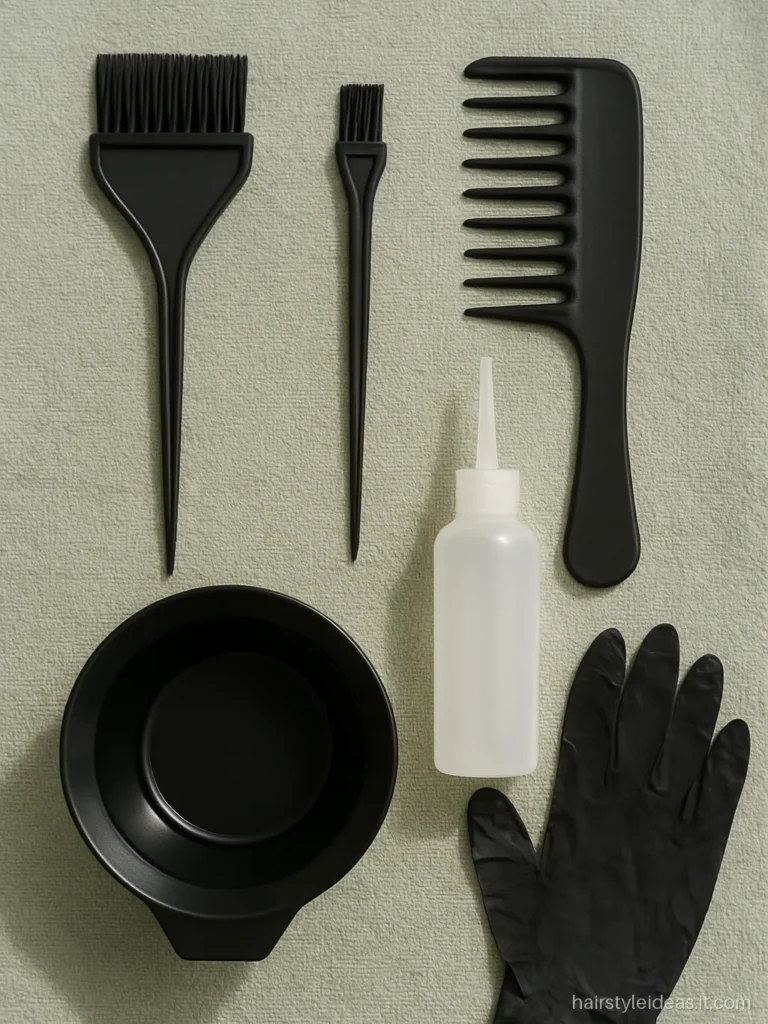
A good hair colour brush is the difference between neat, even roots and a patchy crown with dye on your forehead. Most home colouring mistakes come from tools and sectioning, not the dye itself.
This guide covers the kit (brush, comb, bowl and applicator bottle), how to colour hair at home step by step, the difference between gel, cream and powder colours, what the developer in the box does, and quick cover tricks for an event. Home colour works best for root touch ups, grey coverage and going a shade darker. For lighter results, balayage or bleach, a salon is safer; see balayage hair colour for why.
Before choosing a dye type, compare permanent hair colour with ammonia free and natural options.
01
Home Colour Tools and Results
The tools worth owning, and two results a careful home job can give.
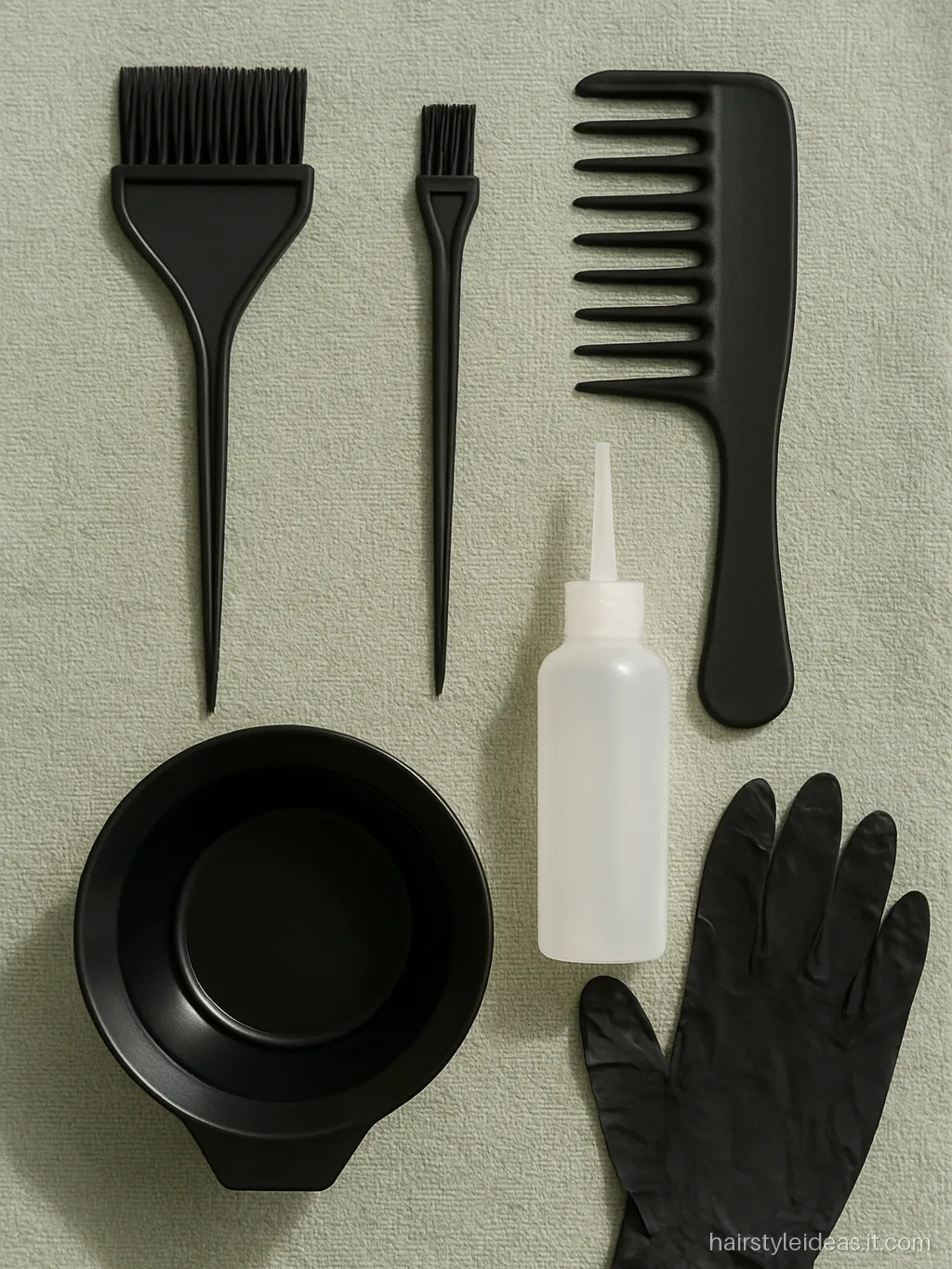
A flat brush with a tail end, a wide tooth tint comb, a plastic bowl and a nozzle bottle cover every home job. Wash and dry them after each use so old dye does not muddy the next mix.
- SuitsAny base
- TimeReusable for months
- NeedsBrush, bowl, nozzle bottle
Mirror tipChoose a brush about 4 cm wide; wider ones carry too much dye and drip at the parting.
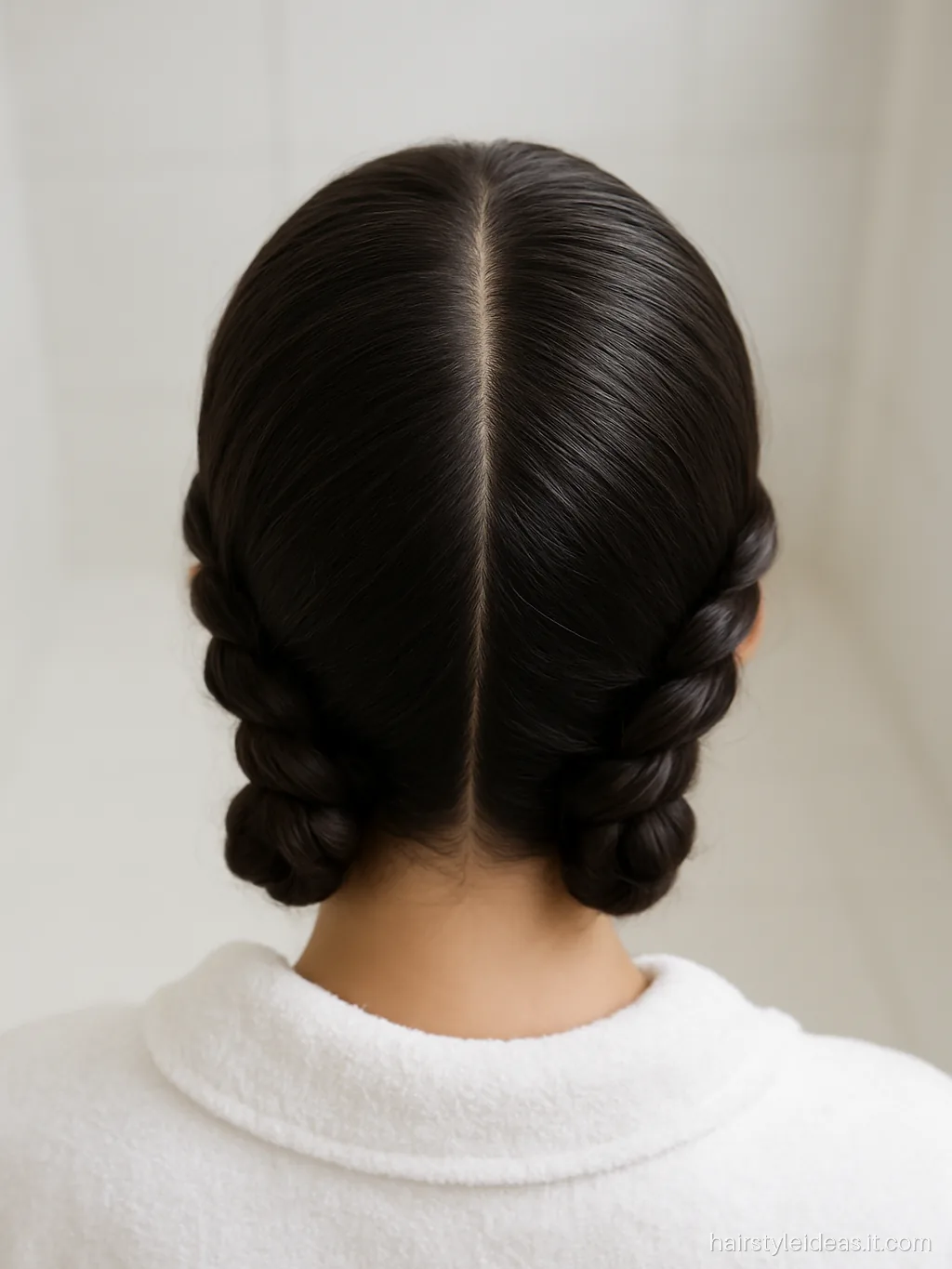
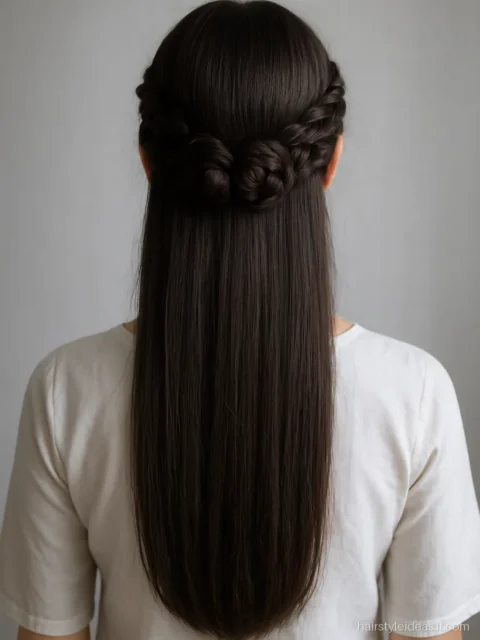
A clean root touch up hair colour job: the parting is even dark brown with no grey and no stain on the scalp. Thin slices are what make it look this neat.
- SuitsBlack base, grey at roots
- TimeRepeat in 4 to 6 weeks
- NeedsTint brush, 20 vol
Mirror tipUse the tail of the brush to drop a new parting every 1 cm and paint each one.
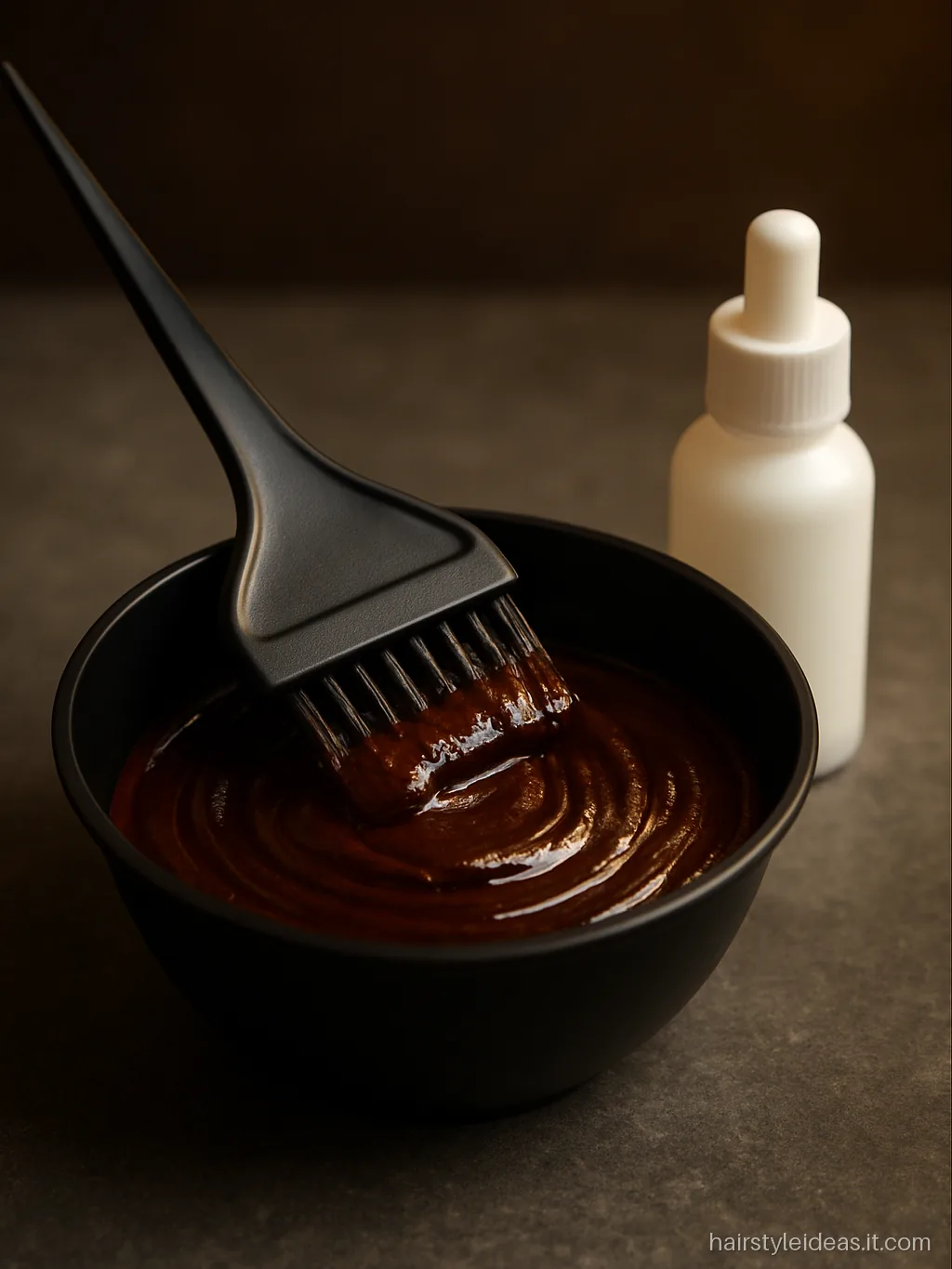
Gel hair colour is thinner and glossier than cream and slides into thick hair easily. It runs more, so apply less at a time near the hairline.
- SuitsBlack to dark brown base
- TimeMix and use in 5 minutes
- NeedsGel tint, developer
Mirror tipStir gel colour for a full minute; streaks of unmixed gel give patchy roots.
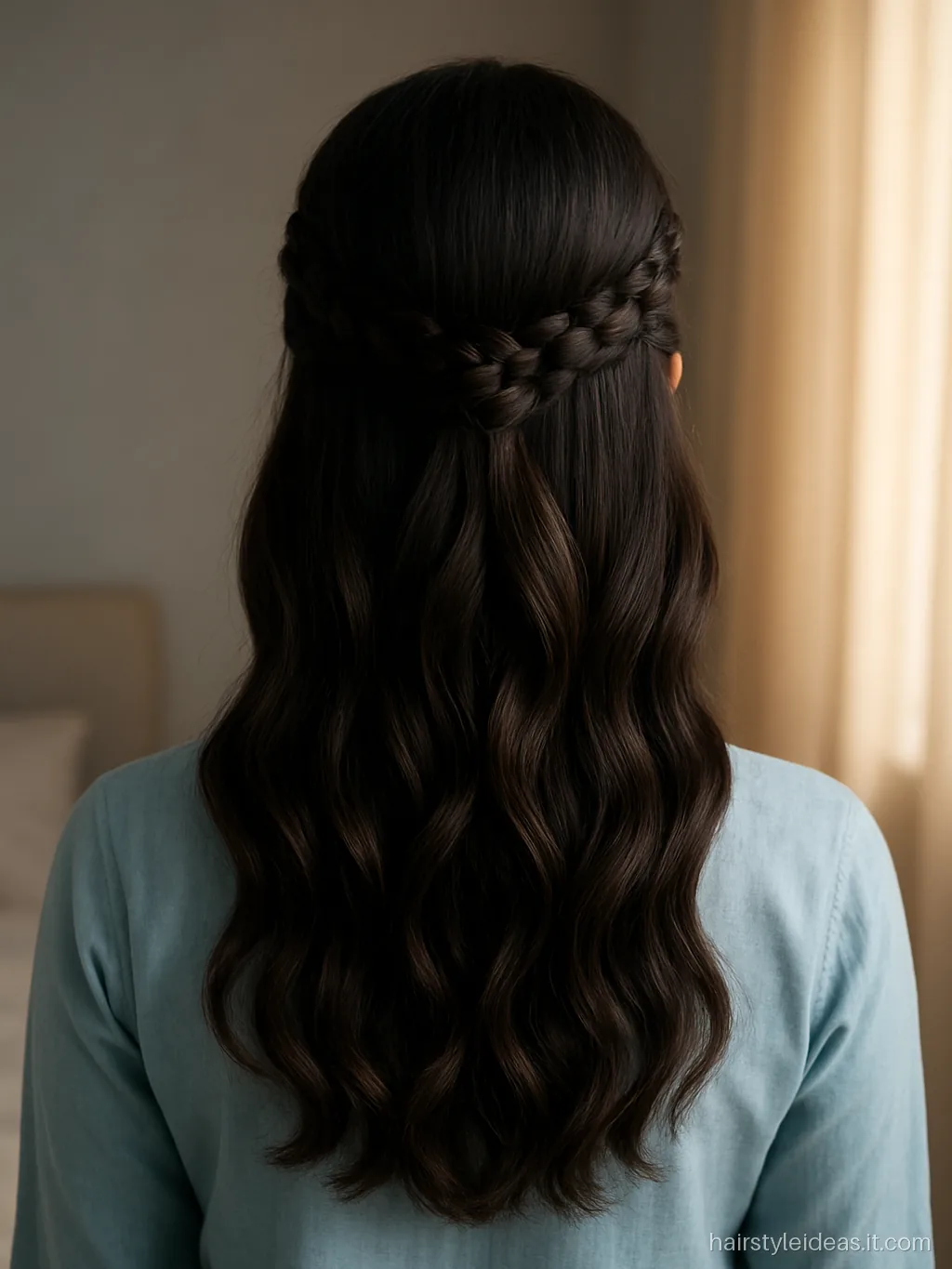
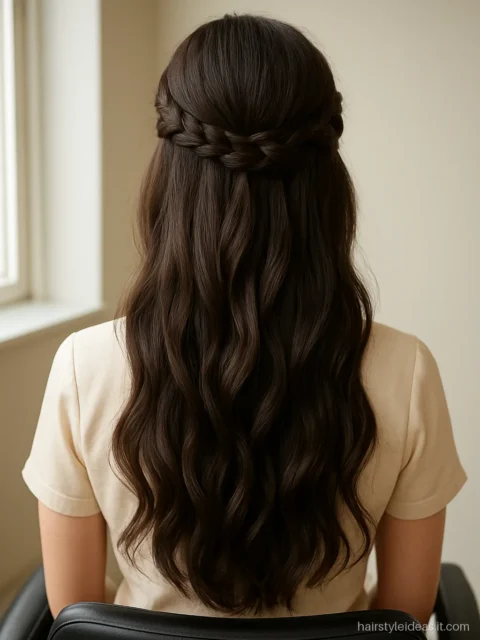
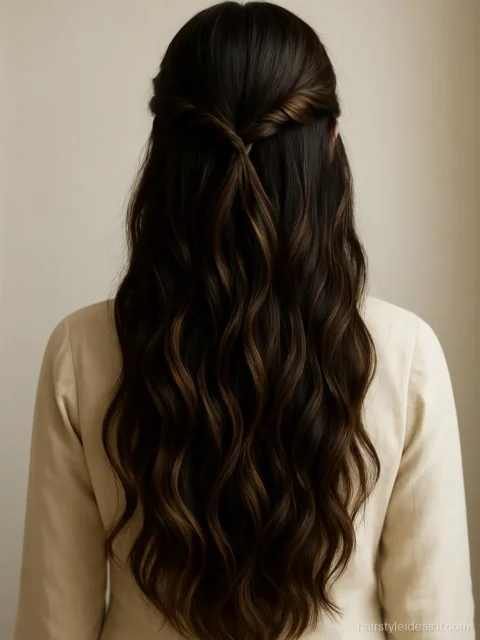
An even dark brown from roots to ends, done at home by working in four sections. It looks salon smooth because the lengths were only refreshed for the last minutes.
- SuitsBlack base, some grey
- TimeRoots in 4 to 6 weeks
- NeedsCream tint, 20 vol
Mirror tipUse a hand mirror facing the wall mirror to check the back before you start the timer.
Choosing a Hair Colour Brush, Comb and Bottle
| Tool | Best for | What to look for |
|---|---|---|
| Flat tint brush with tail | Roots, partings, grey at temples | Firm bristles about 4 cm wide; a pointed tail for parting |
| Narrow root brush | Hairline and around the ears | Small, angled head |
| Hair colour comb | Pulling colour through lengths evenly | Wide teeth, plastic, never metal |
| Applicator bottle with nozzle | Thick or long hair, fast root work | Long nozzle that reaches the scalp |
| Brush and comb combo | Single tool for root touch ups | Brush on one end, fine teeth on the other |
| Plastic bowl | Mixing | Not metal, which can react with the mix |
Also keep gloves, plastic sectioning grips, an old towel, a shower cap and a little oil or cream for the hairline.
How to Colour Hair at Home, Step by Step
- Patch test 48 hours before. Mix a tiny amount, dab it behind the ear and keep it dry for two days.
- Strand test. Try the mix on a small strand underneath at the back to confirm shade and timing.
- Start with dry hair washed a day or two earlier, not freshly shampooed.
- Protect your skin. Oil or cream on the hairline, ears and neck. Old T-shirt and gloves on.
- Section into four. A centre parting, then a line over the crown ear to ear. Twist and grip each section.
- Mix colour and developer in the bowl just before starting.
- Brush the roots. Start at the front sections where grey is heaviest. Take 1 cm slices with the tail of the hair colour brush and paint the regrowth on both sides of each slice.
- Move to the back, using two mirrors. Work fast and in the same order each time.
- Time from the end of application, usually 30 to 40 minutes.
- Refresh the lengths only if faded: work some colour down the lengths with the comb during the final 5 to 10 minutes.
- Rinse with lukewarm water until it runs clear, then condition. Skip shampoo for two days.
Gel, Cream or Powder Colour
- Cream colour: thick, stays where you put it. Easiest for beginners and grey at the temples.
- Gel hair colour: thinner and shinier, spreads quickly through thick hair, but drips more. Good with an applicator bottle.
- Hair colour powder: two kinds. Dye powders mixed with water are permanent oxidation colours, often with PPD, and stain skin easily. Root touch up powders are temporary pressed pigments dabbed on dry roots and washed out next shampoo.
- Shampoo colour: lathered in for a few minutes; see hair colour shampoo.
Hair Colour Developer Basics
Developer is the peroxide liquid or cream mixed with permanent colour. It opens the hair, develops the dye and lifts your natural colour slightly. 10 volume (3 percent) mainly deposits colour, and 20 volume (6 percent) is the usual home strength that covers grey and lifts one or two levels. Stronger developers belong in a salon. Always use the developer that comes with the kit, in the exact ratio given, and throw away any leftover mix; it cannot be saved.
Instant Hair Colour Touch Up for an Event
When grey roots show and there is no time to dye, instant hair colour touch up products cover them until the next wash:
- Root spray: spray from about 10 cm along the parting in short bursts and let it dry.
- Root powder or compact: dab onto dry roots with the small brush supplied.
- Colour stick or mascara style wand: for a few grey hairs near the temples.
These sit on top of the hair and can rub off in sweat or rain. More on these on temporary hair colour.
Common Home Colour Mistakes and Fixes
- Patchy crown: sections too thick. Use 1 cm slices and more product at the back.
- Dark band on the lengths: colour overlapped onto old colour every month. Roots only next time.
- Grey at temples still showing: apply there first and leave the full time.
- Skin stains: remove at once with oil on cotton; next time use a barrier cream.
- Colour too dark: wash twice with a clarifying shampoo in the first two days; it may lift slightly.
- Brassy or uneven after henna: see a colourist rather than layering more box dye.
Safety and Aftercare
Patch test every time, even with your usual shade, because allergy can appear after years. Never colour over a scalp with cuts or a rash, keep dye away from brows and lashes, and keep the window open. If you feel itching, burning or swelling, or see a rash, rinse it out with plenty of cool water and let a dermatologist check your scalp. Never use hair dye on children.
Afterwards, wait two or three days before washing, use a sulphate free shampoo with cool water, apply heat protectant before styling and cover your hair in strong sun.
Questions people ask
Which hair colour brush is best for root touch up?
A flat tint brush about 4 cm wide with a pointed tail is easiest. The tail makes clean partings and the flat bristles lay colour right at the scalp. A narrow brush helps around the ears.
Do I need a hair colour comb as well as a brush?
It helps. The brush places colour on the roots, and a wide tooth plastic comb spreads it evenly through the lengths in the last minutes. Never use a metal comb with dye.
Is gel hair colour better than cream?
Neither is better; they suit different hair. Gel spreads fast through thick hair, while cream stays put and is easier at the hairline and temples.
What does the hair colour developer do?
It activates the dye and lightens your own colour a little so the new shade shows. Use the one in the box in the stated ratio, and do not reuse mixed colour.
Does instant hair colour really work in minutes?
Quick dyes still need their full development time, and very resistant grey may need a second go. Instant root sprays and powders do work in minutes, but they wash out with the next shampoo.
How often can I colour my hair at home?
Roots every four to six weeks is common. Avoid colouring the full length each time; refresh the ends only when they look faded.