Hairstyle ideas
Cornrows Hairstyle, Box Braids, Afro and Locs
Cornrows hairstyle and box braid ideas with care steps, scalp tension signs and how long to keep them in, plus afro and locs, rooted in African traditions.

A cornrows hairstyle is made of small braids woven flat against the scalp in neat rows, and it is one of the oldest braided styles in the world. Cornrows, box braids, the afro and locs all come from African and Black hair traditions, where braiding has long been shared from one generation to the next and patterns have carried meaning about family, community and identity. They are skilled crafts, not passing trends, and they are worth wearing with that history in mind.
Many of these looks are protective styles: they tuck the ends away and cut down daily combing, which helps coily hair keep its length. They can also be hard on the scalp if they are too tight or kept in too long. This page shows ten styles with what hair they suit, how long they take and what is involved, and then explains the method, scalp tension, care and how many weeks to keep each one.
If you have straight or wavy Indian hair and want a flat braid you can do at home, the Dutch braid uses the same under-crossing stitch. Every plait on the site is on the braid hairstyle hub.
01
Cornrows Hairstyle Ideas
Cornrows are braided with an underhand stitch, so each row sits raised on the scalp. The parting pattern is where the artistry shows.
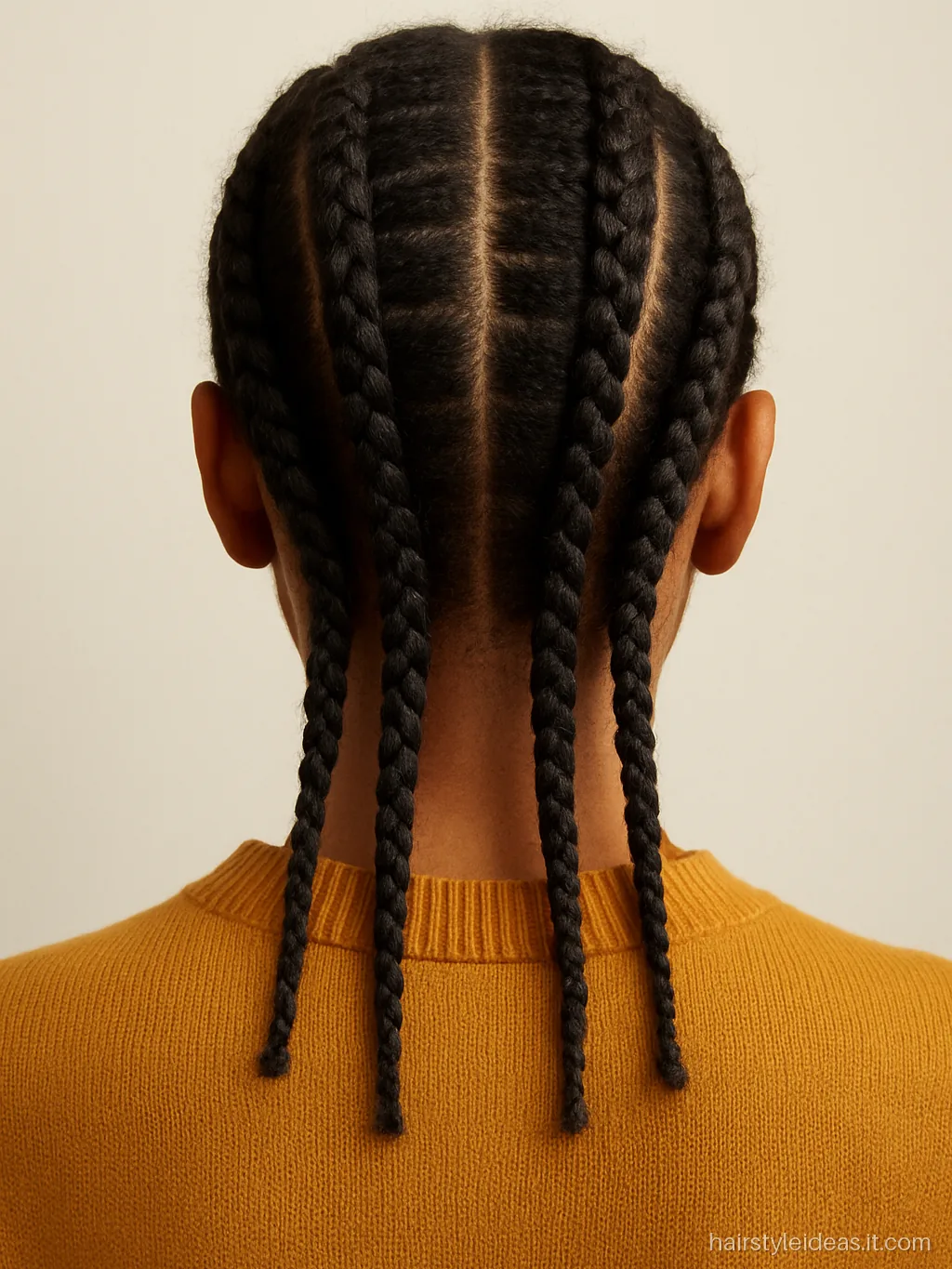
Even rows from the hairline to the nape: the foundation every braider learns first, and a clean base under wigs and wraps.
- SuitsCoily 4A to 4C hair
- Time1 to 2 hours
- NeedsRat tail comb, gel, oil
Mirror tipEach row should feel snug, never sore. If you wince while it is being done, ask the braider to ease off.
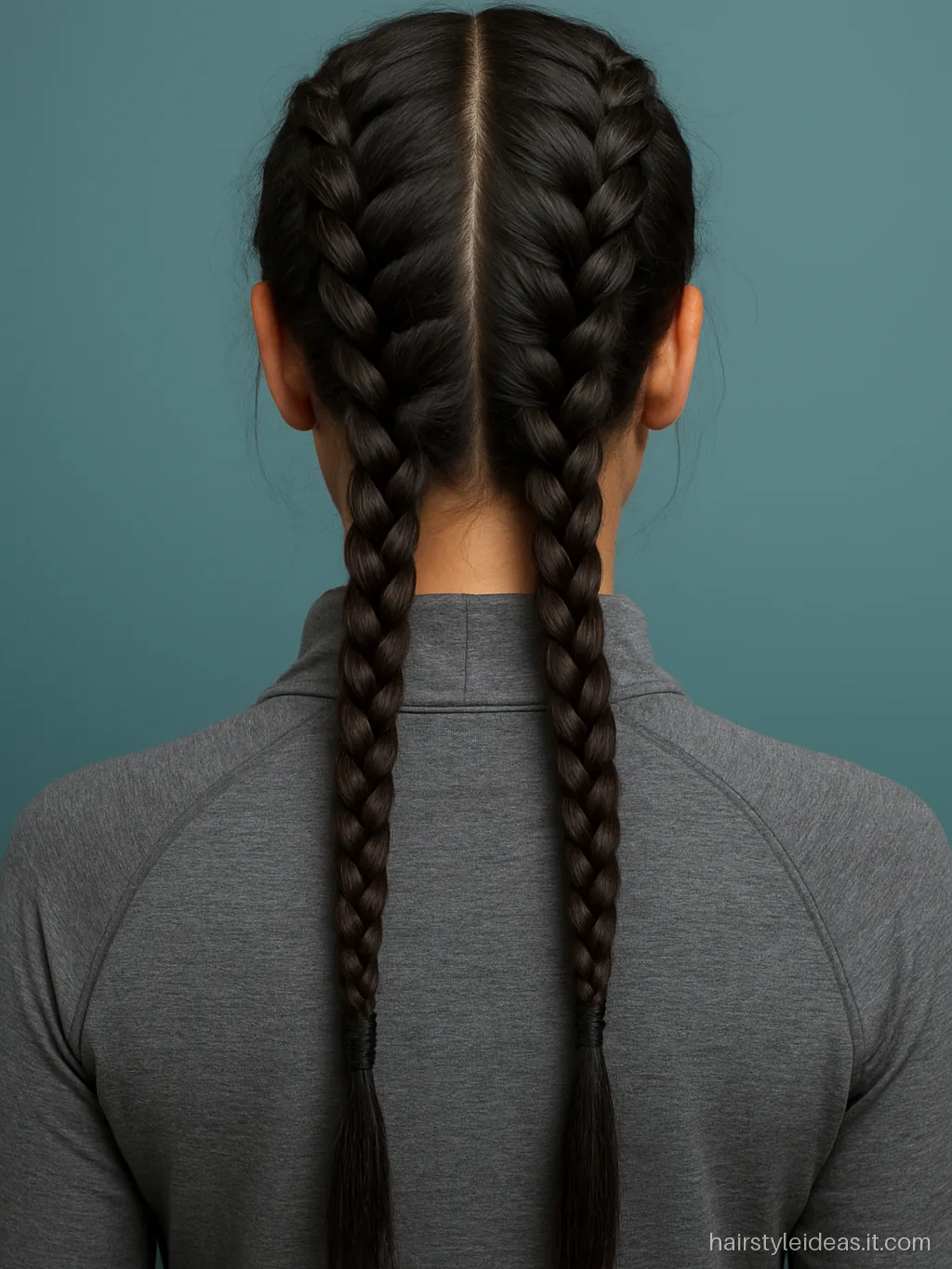
Two thick rows with braiding hair fed in gradually, so the braid starts small at the front and grows fuller. Popular for sport and travel.
- SuitsShoulder length and up
- Time1 to 1.5 hours
- NeedsBraiding hair, edge gel
Mirror tipFeed-in hair added little by little puts less weight on the hairline than a big chunk added at the start.

Curved partings take more skill and time; the rows swirl up to the crown and finish in a bun that keeps the ends tucked away.
- SuitsCoily or curly hair
- Time2 to 3 hours
- NeedsBraiding hair, pins, gel
Mirror tipWrap the bun loosely so it does not drag the rows; a heavy, tight bun is the usual cause of crown soreness.

Stitch braids show tiny ladder lines along each row and sharp zigzag partings. Detailed work that rewards an experienced braider.
- SuitsCoily, shoulder length
- Time2 to 3 hours
- NeedsBraiding hair, edge brush
Mirror tipKeep the rows covered with a satin scarf at night so the stitch lines stay crisp longer.
How a Cornrows Hairstyle Is Braided
Cornrows take practice and a good eye for partings. For a full head, most people book a braider who specialises in textured hair. This is the basic method so you know what to expect:
- Start with clean, fully detangled and moisturised hair. Coily hair is often stretched first by blow drying on low heat or by braiding and drying overnight.
- Part a straight row from the hairline to the nape with the tail of a comb. Clip the rest away. A little gel along the part keeps the line sharp.
- At the front of the row, take a small section and split it into three strands.
- Cross the outer strands under the middle, as in a Dutch braid. This underhand stitch is what makes the row stand up.
- With each stitch, pick up a little hair from the row below and add it to the strand closest to it, keeping the braid tight to the scalp.
- For feed-in rows, add small pieces of braiding hair to the strands as you go, so the row thickens gradually.
- At the nape, carry on as a plain plait to the end and secure it. Synthetic braiding hair is often sealed by dipping the ends in hot water, done carefully by the braider.
- Repeat row by row, keeping the partings even.
On straight or wavy hair, cornrows grip less and usually loosen within a few days. Short layers poke out quickly. A Dutch braid or two braids give a similar look that suits straighter hair.
02
Box Braids: What People Mean by a Box Hairstyle
Searches for a box hairstyle usually mean box braids: many single plaits, each from its own square parting, often lengthened with braiding hair.
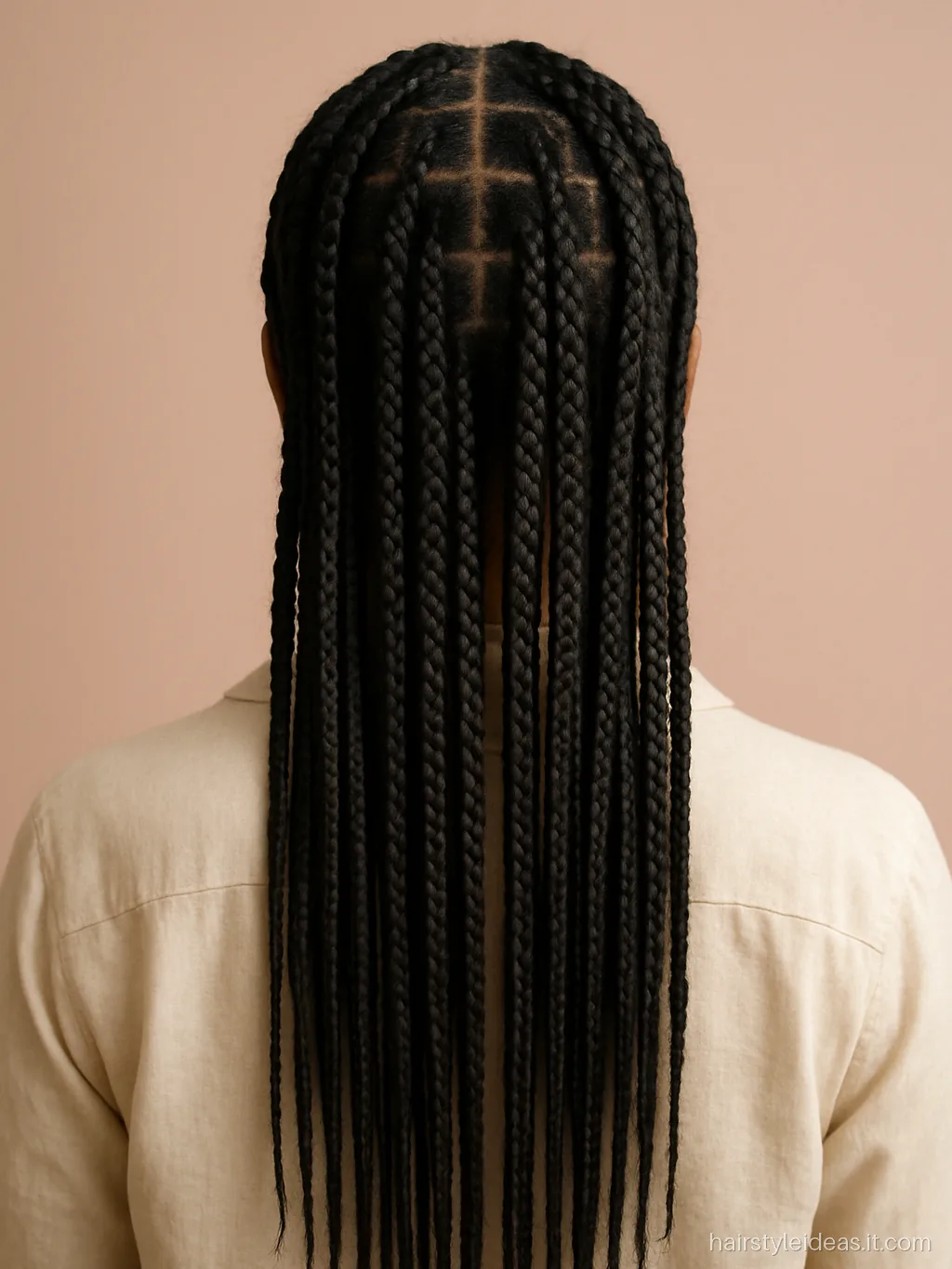
Medium braids are the balance point: not too heavy, not too slow to install, and they last about six weeks with care.
- SuitsAny texture, added hair
- Time5 to 7 hours
- NeedsBraiding hair, mousse
Mirror tipPick lighter, shorter braids for your first set; very long braids add weight that pulls at the roots.

Knotless braids start with your own hair and add extension gradually, so they lie flatter and feel lighter at the root.
- SuitsAny length, added hair
- Time6 to 8 hours
- NeedsBraiding hair, scrunchie
Mirror tipTie the half-up bun with a fabric scrunchie, never a thin band, and change its position every couple of days.
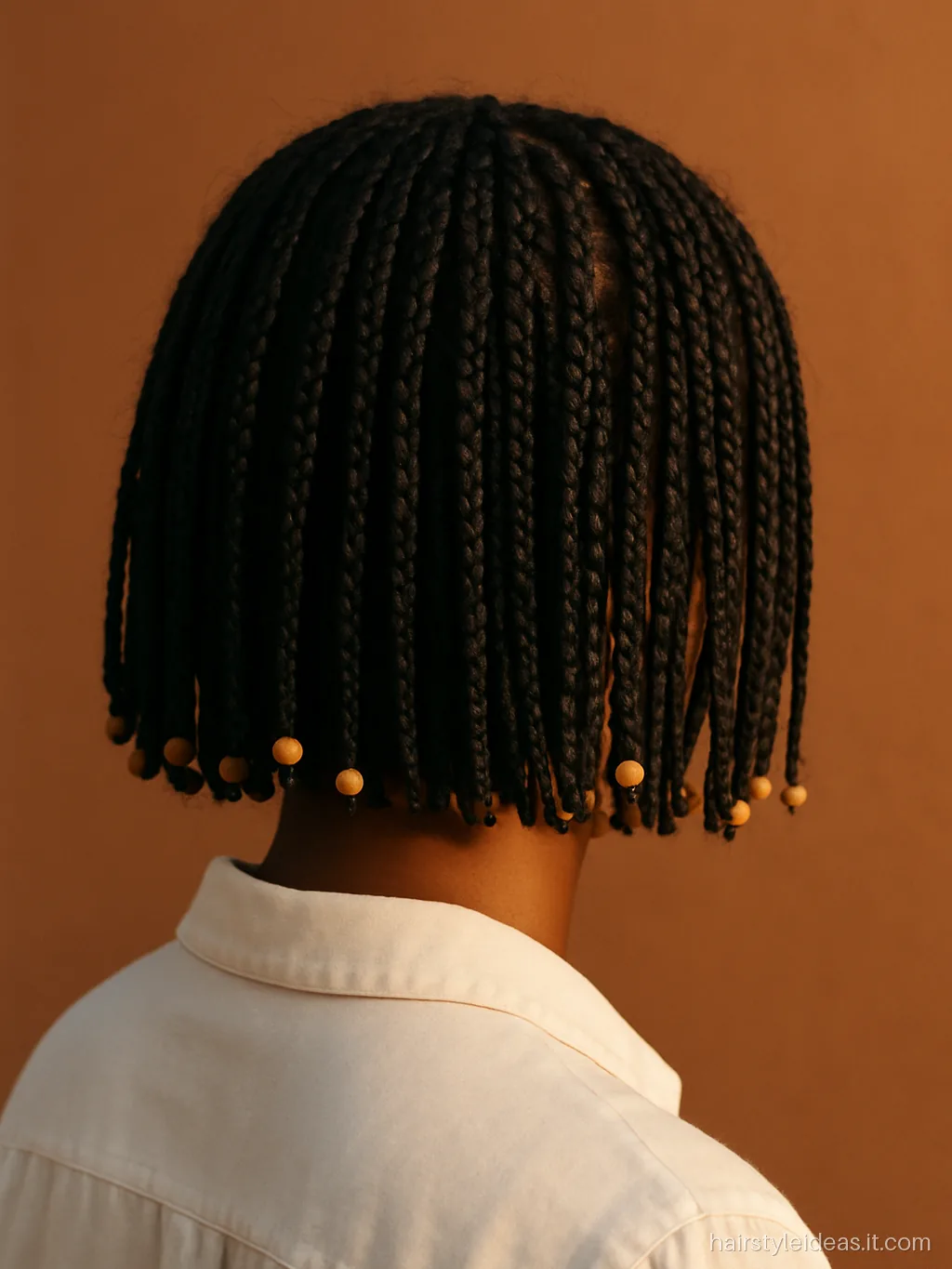
Chin length braids are lighter on the scalp and quicker to install. Wooden beads add a little swing.
- SuitsChin length, added hair
- Time4 to 5 hours
- NeedsBraiding hair, beads
Mirror tipChoose light beads and only on some braids; a full head of heavy beads tugs at every root.
03
Afro Hairstyle and Dreadlocks Hairstyle Ideas
An afro is natural coily hair worn in its full shape; locs (often searched as dreadlocks) are hair that has been encouraged to lock together over months. Both are African hairstyle traditions with deep cultural weight.

A full afro is natural 4A to 4C hair, moisturised and lifted from the roots with a pick. Shape matters more than size.
- SuitsNatural 4A to 4C coils
- Time20 minutes
- NeedsAfro pick, leave in, oil
Mirror tipLift from the roots with the pick and leave the ends alone; combing the ends causes frizz and breakage.

The afro puff gathers coils at the crown with a scarf instead of an elastic, so there is less pulling on the hairline.
- SuitsCoily, chin length and up
- Time10 minutes
- NeedsSilk scarf, cream, water
Mirror tipDampen the edges with water and a little cream, then tie the scarf just firm enough to hold the puff.

Mature locs are long term and grow with you. Pinned up, they keep the neck cool and rest the roots from the weight.
- SuitsEstablished locs
- Time15 minutes
- NeedsLarge pins, scarf, oil
Mirror tipUse large open pins and change the updo position often so the same roots do not carry the weight daily.
Scalp Tension and How Long to Keep Them In
The biggest risk with braided and locked styles is tension. Braids pulled tight, especially at the edges and temples, can cause pain and, if repeated, traction alopecia: hair loss from constant pulling that can become permanent. Warning signs are soreness that lasts more than a day, small bumps or pimples at the roots, headaches, and hair breaking at the hairline. If you notice any of these, take the style out or loosen it, and see a dermatologist if the hairline is thinning.
| Style | Usually kept in | Notes |
|---|---|---|
| Cornrows, own hair | 1 to 2 weeks | Longer on coily hair, shorter on straight hair |
| Feed-in cornrows | 2 to 4 weeks | Redo edges, not the whole head, if they lift |
| Box or knotless braids | 4 to 6 weeks | Avoid going past about 8 weeks; roots can tangle and mat |
| Afro puff | A day, then redo | Change the height so the same edges are not pulled |
| Locs | Long term | Maintain the roots gently every few weeks |
Give your hair a break of a week or two between long braided styles. Ask your braider for lighter, shorter braids if your scalp is sensitive.
Caring for Braids, Afros and Locs in Indian Weather
- Wash the scalp, not the braids. Dilute a gentle shampoo in water, apply it to the scalp with a nozzle bottle, massage with your fingertips and rinse well. Wash every one to two weeks.
- Dry completely. In humid weather braids and locs stay damp inside. Air dry fully or use a dryer on cool, or they can start to smell musty.
- Moisturise lightly. A light oil on the scalp and a leave in spray on the lengths are enough. Heavy grease builds up.
- Cover at night. Sleep in a satin scarf or bonnet, or on a satin pillowcase, to cut friction and frizz.
- Take out gently. Unbraid slowly, then detangle with conditioner and your fingers before any comb. Shed hair that comes out is normal after weeks in braids.
Locs are a long term commitment. Undoing them takes many hours of careful combing, and many people cut them instead, so think it through before you start. Faux locs, wrapped over braids, give the look for four to eight weeks. When you choose any of these styles, book an experienced braider, learn the names of the styles and where they come from, and wear them with respect. For curl care basics, see the curly hair care guide.
Questions people ask
How long can I keep cornrows in?
With only your own hair, about one to two weeks; with feed-in braiding hair, two to four weeks. On straight hair they loosen faster. Take them out sooner if your scalp hurts or itches badly.
How long should box braids stay in?
Most braiders suggest four to six weeks, and no more than about eight. After that the new growth at the roots can tangle and lock, which makes removal harder and causes breakage.
Can Indian hair be braided into cornrows or box braids?
Yes, but straight and wavy hair is slippery, so the braids loosen sooner and short layers poke out. Box braids with braiding hair hold better than cornrows on straight hair. Choose an experienced braider and keep the edges loose.
Can I get an afro hairstyle with straight hair?
A true afro grows from naturally coily hair. Wavy and curly hair can be given lots of volume with a braid out or twist out set overnight, without chemicals, but it will look different from a natural afro.
Are dreadlocks permanent?
Locs are long term because the hair locks together. Taking them out means many hours of combing or cutting them. Faux locs are a temporary option that lasts a few weeks.