Hair guide
Braid Meaning: Choti, Plait and Every Type Explained
Braid meaning in English and Hindi: choti, chotiyan, veni and gutt explained, braid versus plait, why juda is a bun, and every braid type in one table.

The braid meaning is simple: a braid is hair divided into three or more strands that are crossed over one another again and again until they form one rope. In Hindi it is a choti (चोटी), and in most Indian homes it is the first hairstyle a mother ever teaches.
This page explains the word in English and in Indian languages, clears up braid versus plait, and shows how the main types differ, with a link to a full gallery for each. If you want styles straight away, go to the braid hairstyle collection.
01
Braid Meaning Shown on Real Hair
The same idea, strands crossing strands, gives very different results depending on how you cross them.

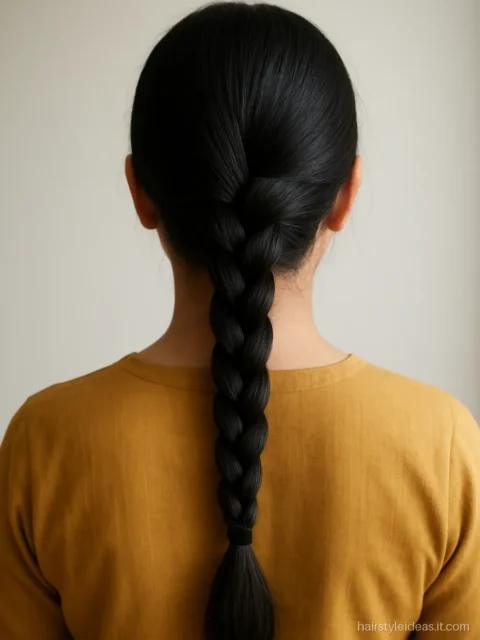
This is the basic braid every other type grows from. Each side strand crosses over the middle one in turn, which gives the neat zigzag down the back.
- SuitsShoulder length and longer
- Time5 minutes
- NeedsComb, 1 clear elastic
Mirror tipKeep the three strands equal in thickness at the start; uneven strands make the choti lean.
On the left, strands cross over, so the French plait lies flat. On the right, they cross under, so the Dutch plait stands up from the head.
- SuitsMid back, any texture
- Time12 minutes each
- NeedsTail comb, 2 elastics
Mirror tipRun your finger along the finished plait: flat means French, a raised ridge means Dutch.
Braid Meaning in Simple Words
As a noun, a braid is the finished rope of woven hair. As a verb, to braid is to make it: "braid your hair before bed". The same word is also used outside hair for any woven cord, such as the gold braid on a uniform or a woven trim on a dupatta border, but on this site it always means hair.
Every braid needs at least two strands. Three is the classic number, and four, five or more strands make wider, flatter patterns. Twists are different: two strands are wound around each other rather than crossed, so a rope twist is not a braid in the strict sense, though people often call it one.
02
Veni and Chotiyan: Indian Names on Real Plaits
Two looks whose names explain themselves once you see them.

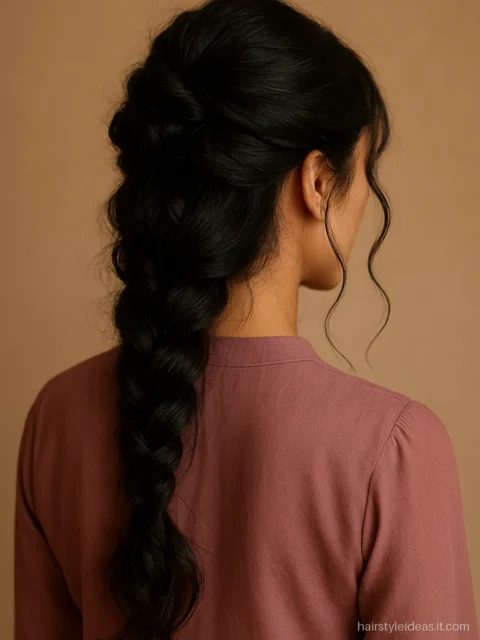
In Marathi and in many South Indian homes, veni can mean the plait itself or the flower string pinned along it. Here it is both.
- SuitsMid back or longer
- Time15 minutes
- NeedsJasmine string, 6 U pins
Mirror tipStart the flower string at the nape and wind it loosely; a tight spiral flattens the plait.

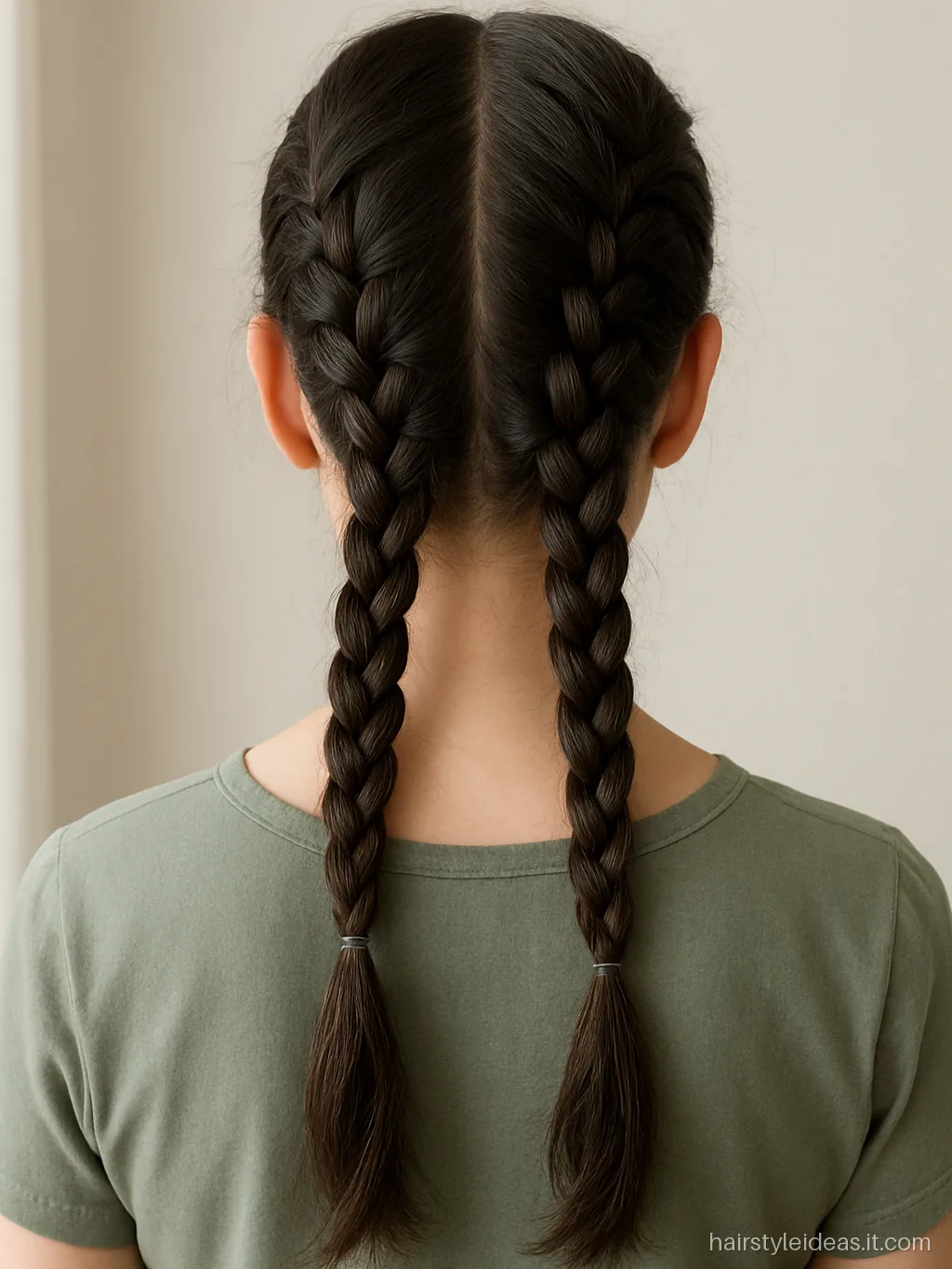
Two plaits with ribbons are what most Indian women call do chotiyan. It is the school look many of us grew up in, now worn loosely for casual days.
- SuitsShoulder length and longer
- Time10 minutes
- Needs2 ribbons, 2 elastics
Mirror tipCheck the centre parting in a hand mirror held behind your head before you start the second plait.
Braid Meaning in Hindi and Other Indian Languages
| Language | Word | What it means |
|---|---|---|
| Hindi | चोटी (choti) | A plait, the most common word |
| Hindi | चोटियाँ (chotiyan, often typed chotiya) | Plaits, more than one |
| Hindi | गूँथना (goonthna) | To plait or weave hair |
| Hindi, Marathi | वेणी (veni) | A plait, or a flower string worn on one |
| Punjabi | gutt | A plait |
| Bengali | beni | A plait |
| Tamil, Telugu | jadai, jada | A plait, as in jada billai ornaments |
Two common mix ups. First, जूड़ा (juda) is a bun, not a braid; a braid can be rolled into a juda, but the words are different. Second, चोटी (choti, braid) is easily confused with छोटी (chhoti, small) when typed in English, which is why searches for "choti hairstyle" bring up both plaits and short hair.
Braid vs Plait: Is There a Difference?
No real difference. Plait is the older British word and braid is the American one. Indian English uses both, and parlours often say plait for a simple three strand choti and braid for fancier work like French, fishtail or box braids. If a stylist says either, she means hair crossed in strands.
Types of Braids and Where to See Them
| Braid | How it is made | Strands | See ideas |
|---|---|---|---|
| Three strand choti | Side strands cross over the middle | 3 | Braid hairstyles |
| French | Hair added to each strand, crossed over | 3 | French braid |
| Dutch | Hair added, crossed under, so it stands up | 3 | Dutch braid |
| Fishtail | Small pieces passed between two halves | 2 | Fishtail braid |
| Waterfall | One strand dropped at every cross | 3 | Waterfall braid |
| Bubble | Ponytail sectioned with elastics and puffed out | 1 | Bubble braid |
| Box braids and cornrows | Many small plaits, often with added hair | 3 each | Box braids and cornrows |
| Messy braid | Any plait loosened and pulled wide | 2 or 3 | Messy braid |
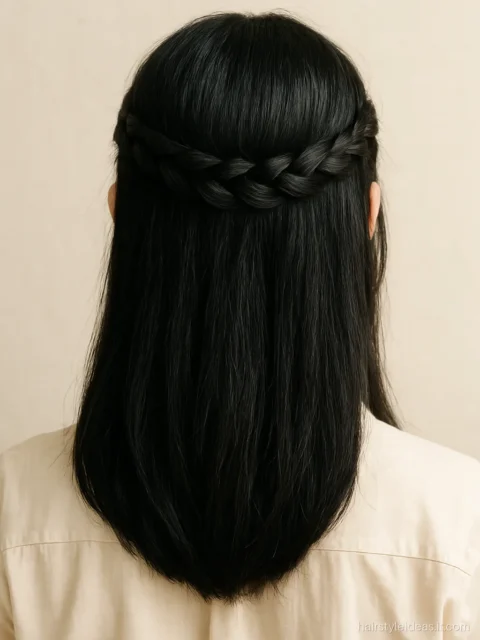
| Front braid | Plait along the hairline or crown | 3 | Front braid |
| Two braids | Two plaits from a centre parting | 3 each | Two braids |
| Paranda plait | Tasselled thread plaited into the choti | 3 | Paranda hair style |
To dress any of these with cuffs, pins or flowers, see the braid accessories guide.
How to Make a Basic Choti
- Detangle from the ends upward with a wide tooth comb.
- Gather the hair at the nape, or wherever you want the plait to start, and split it into three equal strands.
- Bring the strand in your right hand across the centre one, so the two swap places.
- Now do the same with the left hand strand, laying it across whatever sits in the centre.
- Repeat, keeping a steady, even pull, until about 3 cm of hair is left.
- Wind a clear elastic around the end two or three times.
A firm choti lasts all day and even through a night of sleep if it is loose at the roots. For a softer, fuller look, hold the end and gently pull the outer edge of each loop, working from the bottom up. On humid days, smooth a little anti frizz cream along the finished plait to stop the fuzz that appears by afternoon.
Choti Words You Will Hear at the Parlour
- Do choti: two plaits.
- Gajra wali choti: a plait with a flower string.
- Khajoor choti: a common home name for the fishtail, after its palm leaf pattern.
- Paranda wali choti: a plait with a Punjabi tasselled thread.
- Choti ka juda: a plait coiled into a bun at the nape.
When you book, show a picture as well as the name, since these words shift from city to city.
Questions people ask
What is the braid meaning in Hindi?
A braid is चोटी (choti) in Hindi. More than one is चोटियाँ (chotiyan), and the act of plaiting is गूँथना (goonthna). Veni is also used in some regions, especially for a plait decorated with flowers.
Is a juda the same as a braid?
No. A juda (जूड़ा) is a bun, hair wound and pinned into a knot. You can plait the hair first and then coil the plait into a juda, but the words name different styles.
What is the difference between a braid and a plait?
There is none in meaning. Plait is the British word and braid the American one. In India both are used, with plait often meaning a simple three strand choti.
How many types of braids are there?
There are dozens, but most come from a few basics: the three strand choti, French, Dutch, fishtail, waterfall, bubble, and box braids or cornrows. Everything else, from crown plaits to messy plaits, is one of these placed or loosened differently.
What does veni mean?
In Marathi and several other Indian languages, veni means a plait. In everyday use it also means the string of jasmine or mogra flowers pinned along a plait or around a bun.